San Diego pays among the highest electricity rates in the country, and SDG&E charges the most between 4 and 9pm — right when you walk in the door. That's not bad luck. That's their pricing — and you don't have to play along.
TOU-DR1SHS Puts a Power Plant on Your Roof. SDG&E Pays You.
Make your own FREE power all day, store it, and use it when SDG&E is most expensive. Under net billing, SDG&E credits you for the power you send back — and a battery lets you send it when that credit is highest. The math adds up.


Why San Diego Picks SHS Power?
4.9★ on Yelp · Veteran-owned · CSLB #1082533 · Our own crew, start to finish.
60-second check. A real number, not a sales pitch. Nobody knocks on your door.
Illustrative estimates built from the current TOU-DR1 tariff. Your real number depends on your roof, your usage and the system size — that's exactly what the Insider Price tells you.
Summer $381Winter $387
How We Calculated Usage is split 40% on-peak, 35% off-peak and 25% super off-peak, priced at Schedule TOU-DR1 rates over 5 summer months (Jun 1 – Oct 31) and 7 winter months. The fixed Base Services Charge of 79.343¢ per day is included, and the baseline credit of 10.702¢ per kWh is applied to the first 130% of an assumed coastal-zone baseline allowance of 10 kWh per day. Inland, mountain and desert zones have larger allowances.
The solar + battery scenario assumes the system offsets 90% of grid energy purchases, with the battery covering the 4–9pm window; the fixed charge still applies. It excludes the system's cost or monthly payment, incentives, taxes and non-bypassable charges, and assumes no SDG&E rate escalation.
Estimates only — not a quote, not a guarantee. Tariff effective August 1, 2026.
60-second check. Nobody knocks on your door.
San Diego pays among the highest electricity rates in the country, and the same kilowatt-hour is priced three different ways depending on the hour you use it.
tariff eff. Aug 1, 2026 · verified Aug 24, 2026
Schedule TOU-DR1 is SDG&E's standard schedule for residential customers. A Base Services Charge of 79.343¢ per day applies on top of usage, and usage up to 130% of your baseline allowance carries a credit of 10.702¢/kWh. The clock above picks the weekday or weekend schedule from the day of the week; it does not adjust for holidays, which SDG&E prices on the weekend schedule.
Rates: SDG&E Schedule TOU-DR1 Total Rates Table, effective 8/1/2026. Time periods and seasons: SDG&E pricing plans. Verified Aug 24, 2026.
Solar makes your daytime power. A battery moves it into the 4–9pm window.
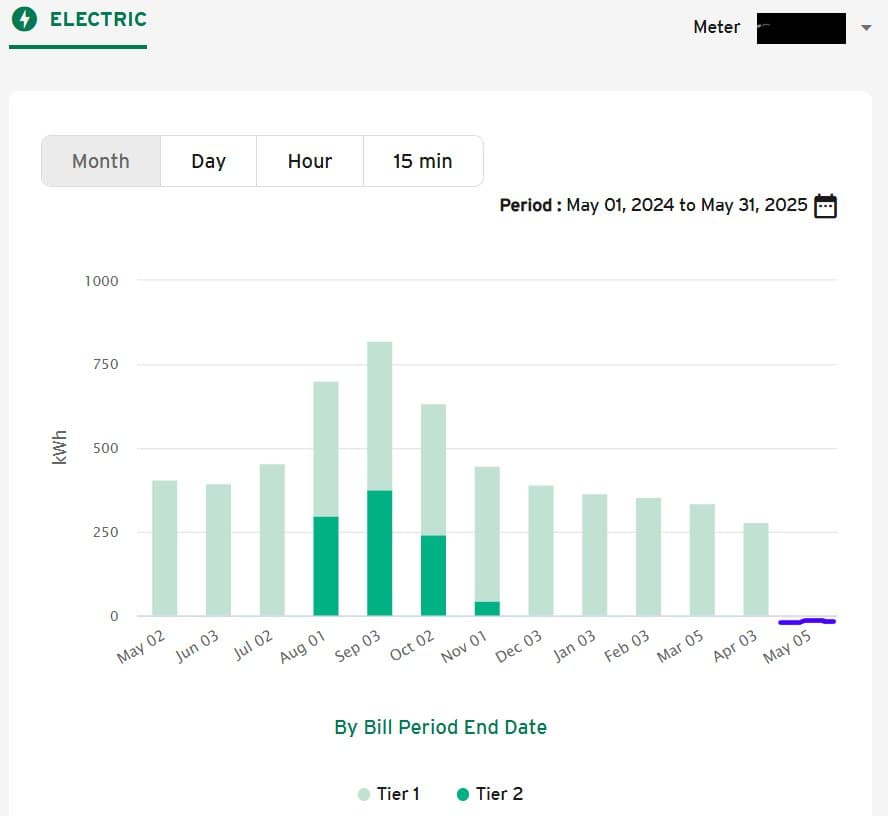
A customer's own SDG&E chart

“The house hasn't used any electricity from the grid since the day SHS switched on the system.”
We call that Winning.
60-second check. Nobody knocks on your door.

San Diego homeowners can stack state, local and utility programs — we check exactly which ones apply to your home
State, local and utility incentives — we check exactly which ones you still qualify for
EcoFlow OCEAN Pro included on qualifying Solar + Battery installs
San Diego Community Power pays $350 per kWh of battery on a new solar + battery system, or $250 per kWh when adding to existing solar, plus 10¢/kWh for discharging weekdays 4–9pm. SDCP residential customers only.
Under SDG&E net billing, a battery is what turns midday sun into evening savings
California excludes solar from property-tax reassessment
Financing available with no money out of pocket at install
Incentive eligibility depends on your home, your utility account and current program funding. We confirm what applies to you before you sign anything.
Three situations where a battery alone changes the math — no new panels required.
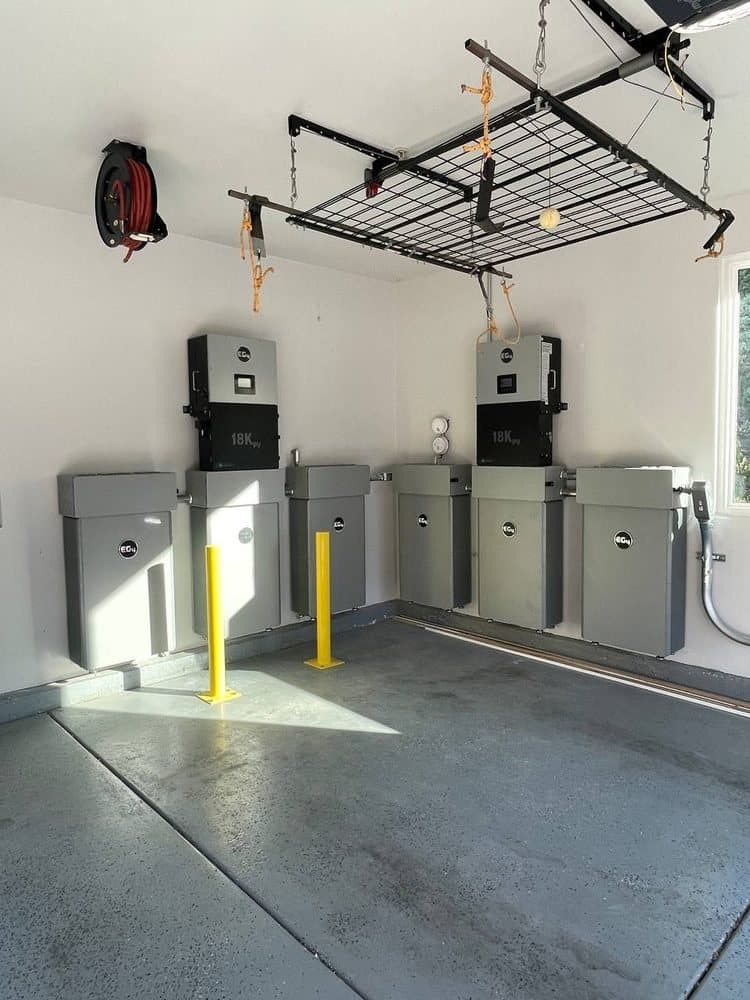
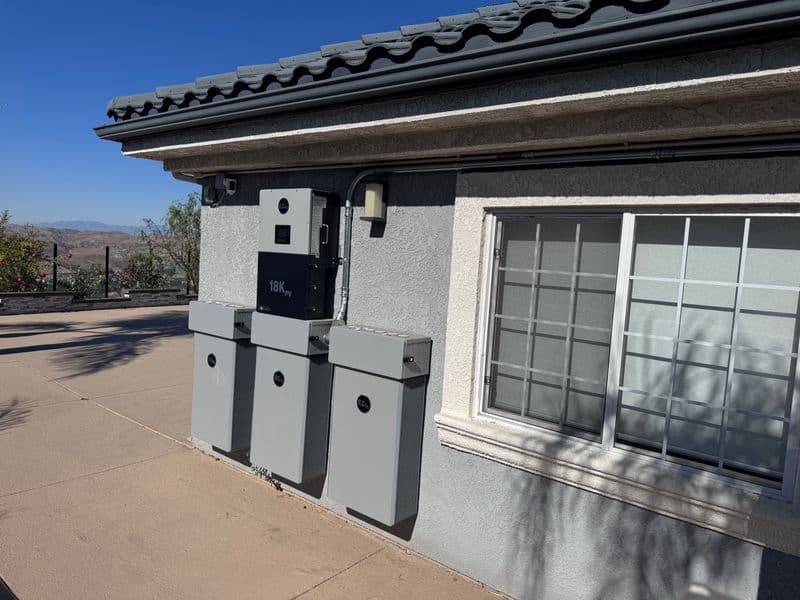
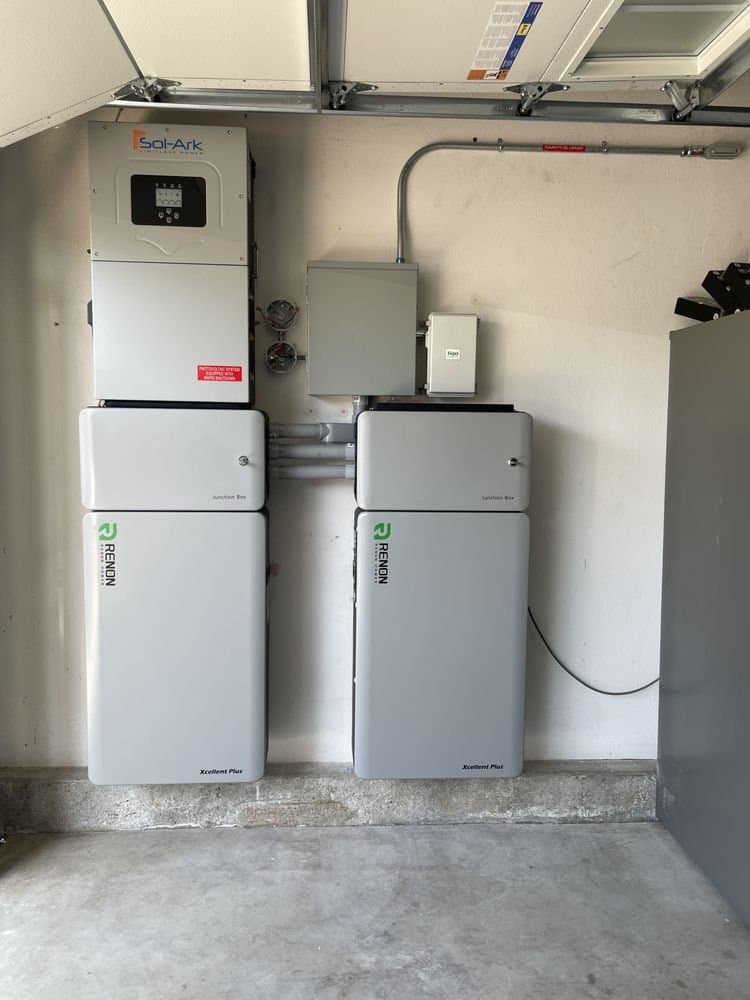
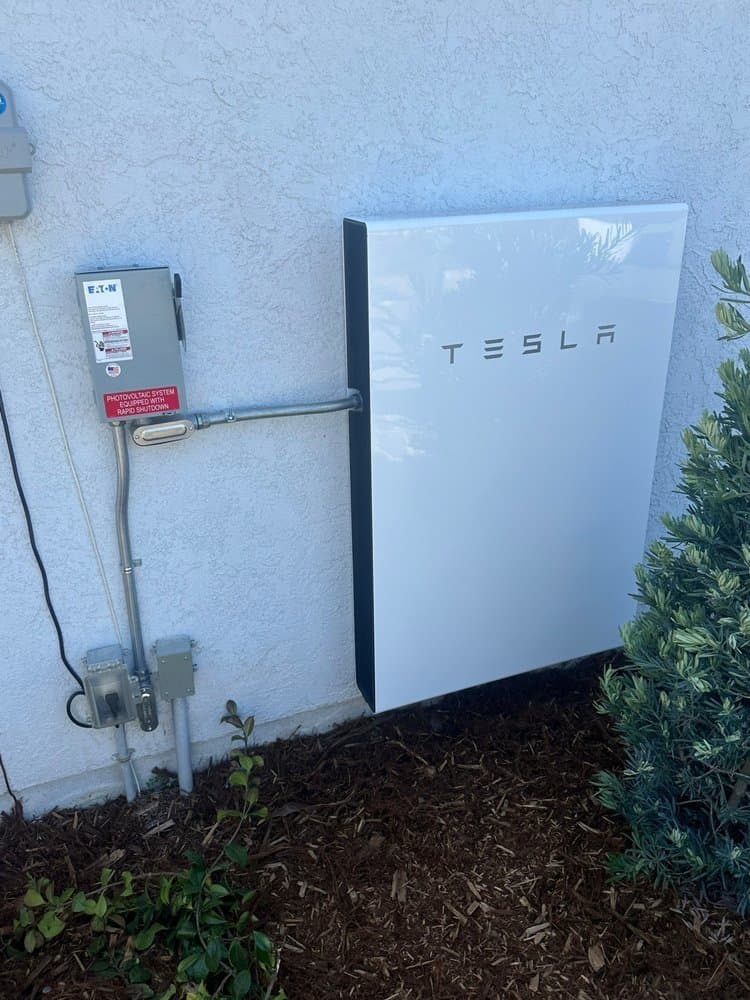
Real SHS battery installs


Under net billing, SDG&E's export credit is lowest in the early afternoon — right when your panels produce the most — and highest around 5–7pm. A battery holds your midday power for the hours it's worth the most.
SDG&E's EV plan charges 13.09¢ overnight and 80.20¢ from 4–9pm in summer. A battery fills up on the cheap hours and runs the house through the expensive ones — the same move the utility makes, on your wall.
Summer weekdays · Jun 1 – Oct 31
12–6am, 10am–2pm
6–10am, 2–4pm, 9pm–12am
4–9pm
Schedule EV-TOU-5 · eff. Aug 1, 2026
NEM 1.0 and 2.0 terms last 20 years from your system's permission-to-operate date. After that you move to SDG&E's Solar Billing Plan, with no rate lock. Systems are already rolling off, and San Diego's 2007-era solar wave turns 20 starting in 2027. Adding a battery keeps your NEM status. Adding panels can end it.
Solar Battery Savings program · SDCP residential customers · enrollment open
$250/ kWh
Up front, for adding a battery to existing solar
A 10 kWh add-on is $2,500 at the published rate
$350/ kWh
Up front, on a new solar + battery system
Higher rates for income-qualified households
10¢/ kWh
Paid for discharging weekdays 4–9pm
The same hours SDG&E charges the most
Rates as published by San Diego Community Power; the battery must charge from your own solar, and eligibility is confirmed at enrollment. We file it for you.
One battery. Three problems handled.
Your panels stay. Your net metering stays. A whole-home battery goes on the wall, and the power you already make starts working the 4–9pm window instead of the 1pm export credit.
Added a battery. Kept his NEM 1.0. In his words:
“I wanted to add about 50% more capacity plus a battery to my existing solar system without jeopardizing my NEW [NEM] 1.0 status, and they did more than that!”
60-second check. No new panels required.

San Diego has had a decade of solar door-knockers, and homeowners here can smell a pitch through a screen door. We don't work that way. You came looking — that means you've already done some homework, and we respect it.
“I had called a few installers and talked with the usual door knocking suspects.”
We follow up — but never pressure. Your timeline, your call
Transparent pricing and every incentive shown up front
Technical specs and monitoring data from real installs
60-second check. Nobody knocks on your door.

Blake · Owner, SHS Power
Veteran-owned · CSLB #1082533 · In business since 2011
Bring your bill and your questions. You get a real read on your usage, your backup goals and what a system would actually do for your house — no pitch, no pressure, from people who install this for a living.
You see the exact system before you say yes: Tier-1 panels, Enphase microinverters, an EcoFlow OCEAN Pro battery. Then the paperwork is ours:
“SHS took care of permitting, which I absolutely refuse to do. I can't stand working with the county.... makes me miserable. SHS just did all that, and fast!”
Never lift a finger until you turn on your new system.
Every incentive you qualify for applied, every state, local and utility program checked for your address, and a house that runs on its own power through the 4-to-9pm peak. Your bill answers to you now.
Real SHS installs


“The house hasn't used any electricity from the grid since the day SHS switched on the system.”
Bayard W. · Escondido
via Yelp · May 2025
“I was super impressed with Dominic's ability to know what the inspectors were looking for and how to 'speak their language'. Passed on the first go.”
Brian M. · San Diego
via Yelp · Aug 2026
“Power was recently cut from 9 PM to 9 AM, and my battery backup handled it beautifully.”
Jose S.
via Yelp · Jun 2025
“The work was so clean that the city inspector took photos to show his colleagues back at the office.”
Kal Z. · San Diego
via Yelp · Aug 2026
“We wanted 42 panels and 4 Tesla batteries and they delivered!”
Crystal M. · Alpine
via Yelp · Aug 2026
“They came the same day and on time and were extremely knowledgeable.”
Ed D. · San Diego
via Yelp · Aug 2026
60-second check. Nobody knocks on your door.
Veteran-owned, licensed, and the same crew from the site visit to the final inspection.
SHS Power, CSLB #1082533, out of Chula Vista. Licensed, insured, and accountable to a real address in the county we install in.
“The company is veteran owned. When Blake first came to the house, I thanked him for his service.”
No subcontractors passing your roof around. The team that specs your system is the team that installs it and comes back if anything needs attention.
“there are many 'brokers' who act as intermediaries between you and the actual provider. This is not one of them -- they handle both project planning and execution.”
Line-item equipment, line-item labor, every incentive named. Compare it to any other quote you have — that's the point.
“The other quotes I got felt like cookie cutter systems, usually too small, not specific to our needs, and quite expensive.”
60-second check. Nobody knocks on your door.
With a battery, yes. NEM 3.0 cut what SDG&E pays you for exported power to a fraction of what it charges you in the evening. Without storage you sell cheap at noon and buy expensive at 6pm. A battery keeps your own power on your side of the meter, which is why almost every San Diego system we install now includes one.
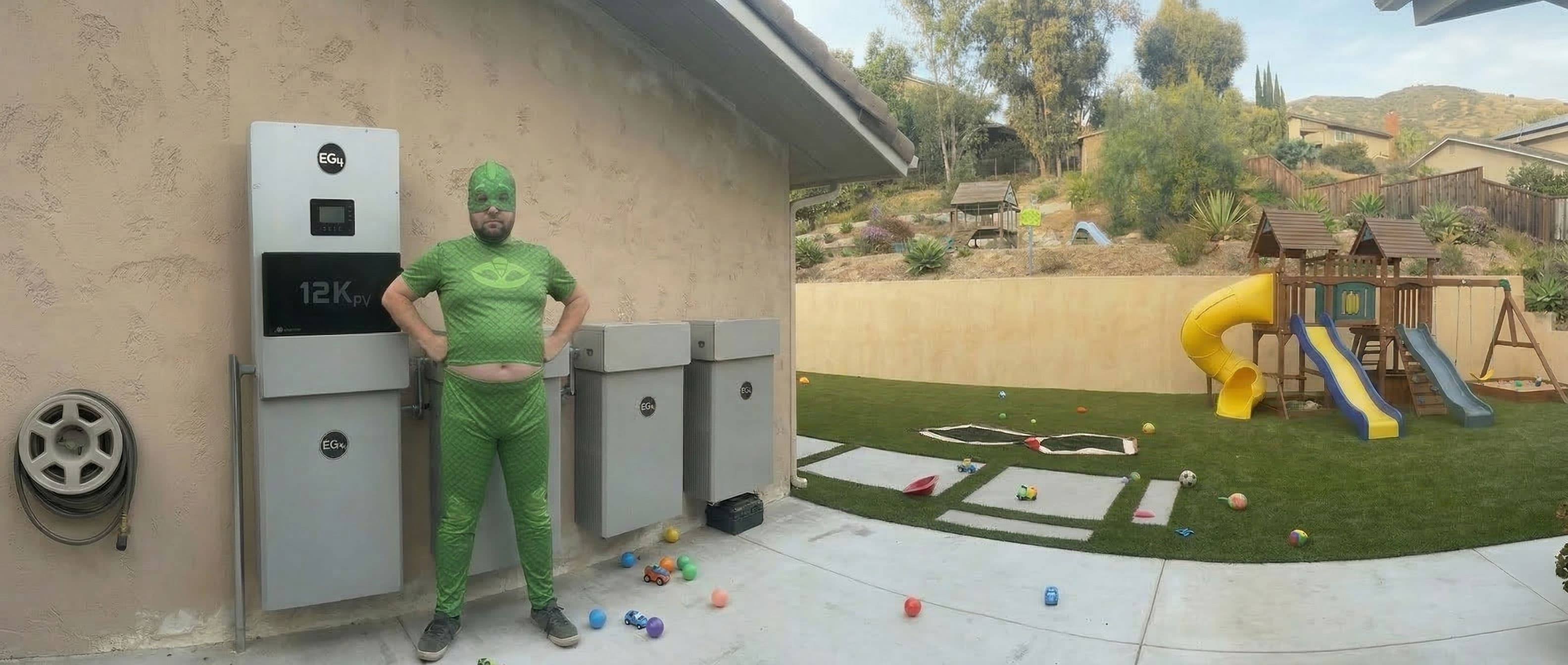
It depends on what you want covered. The OCEAN Pro starts at 10 kWh and stacks to 80 kWh, with up to 24 kW continuous output — enough to carry AC, a well pump or an EV charger, not just the fridge and a few lights. We size it off your real usage and what you want running when the grid is down.
That's the point of the battery. It switches over automatically and keeps your backed-up circuits live. How long depends on capacity and what you're running — we walk through that on the consult so nobody is surprised at hour six of a public safety power shutoff.
Cost depends on system size, your roof and how much storage you want, so we quote it rather than guess. $0-down financing is available, and we check which incentive programs still apply to your home. We show the line items and the incentives together so you can see the real number.
The residential credit ended for systems placed in service after December 31, 2025. Some financing structures still carry federal incentives — your specialist will walk you through what applies to your home.
Not always. Tile and quality shingle roofs often have plenty of life left. If your roof has under about five years in it, replacing it first is usually cheaper than pulling panels later — we'll tell you straight either way during the site visit.
Typically a few weeks from signed proposal to install day, with the install itself usually one to two days. City permitting and SDG&E interconnection add time on the back end before you switch on — we handle both and keep you posted.